
Durable Wall Plug Sets Buying Guide
Quick Answer
Wall plug (anchor) sets only work if the anchor type actually matches the wall material — the strongest-rated anchor in the set is useless in drywall if it’s designed for solid masonry, and vice versa.
Matching Anchor to Wall Material
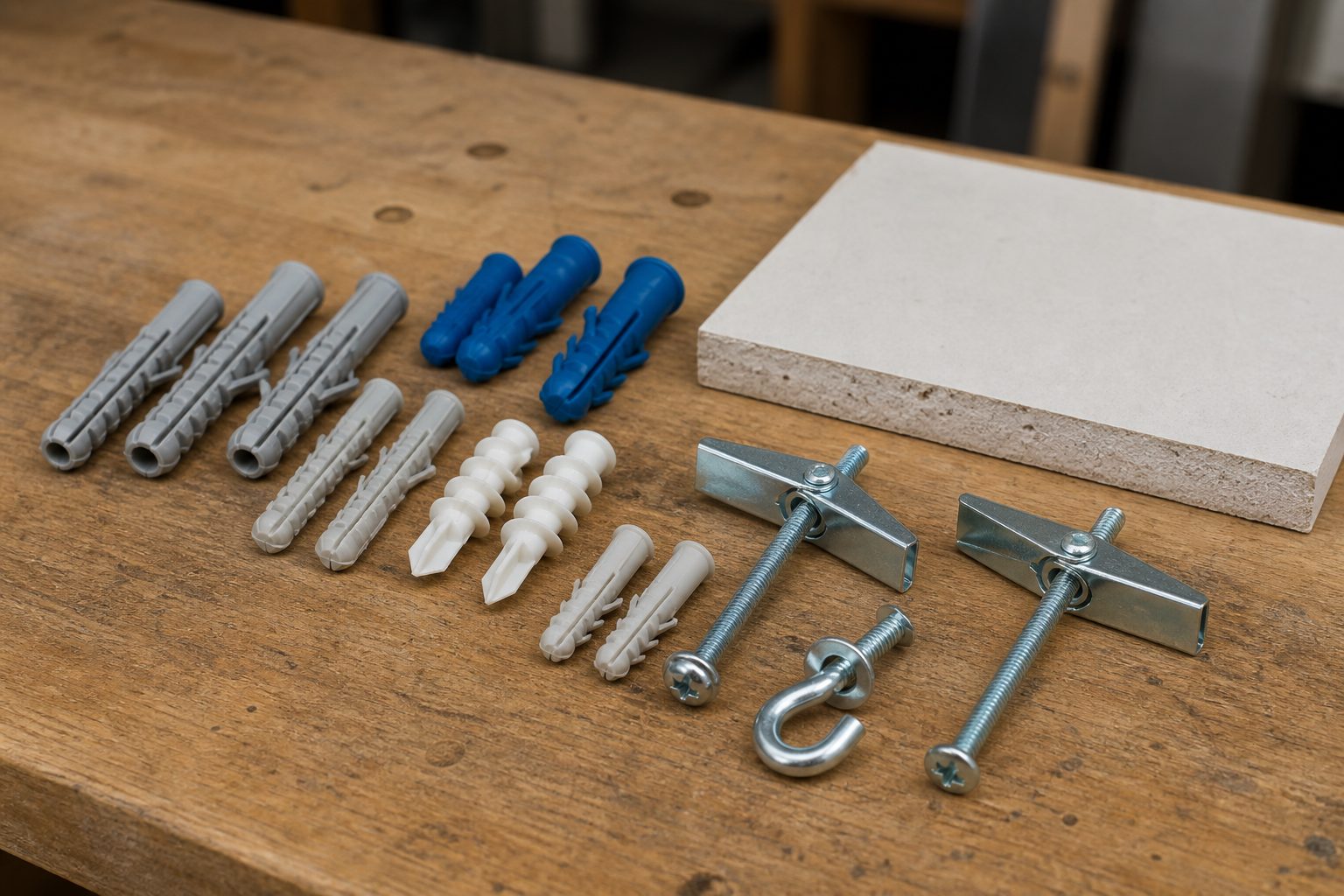
- Plastic expansion anchors: for solid materials like concrete, brick, and stone, expanding against the drilled hole walls when a screw is driven in.
- Hollow-wall anchors (toggle bolts, self-drilling anchors): for drywall and hollow walls, since a standard expansion anchor has nothing solid to grip behind the wall surface.
- Masonry screws: drive directly into pre-drilled holes in concrete or brick without a separate plastic anchor, simpler for lighter loads.
Why Hole Size Matters
An anchor sized for a slightly undersized hole grips firmly; one in an oversized hole simply spins or falls out under load — matching the drill bit size to the specific anchor (usually printed on the packaging) is more important than “close enough.”
Weight Rating Realism
Manufacturer weight ratings assume ideal conditions in undamaged material — for anything heavy like a wall-mounted TV or shelving unit, building in a safety margin below the stated maximum load is a sensible precaution rather than relying on the exact rated limit.
Assortment Coverage
A well-rounded set includes a range of anchor sizes and at least one hollow-wall option alongside solid-material anchors — a set with only one anchor type covers a narrower range of actual household jobs than the piece count might suggest.
Bottom Line
Identifying the actual wall material before selecting an anchor matters more than any single “universal” claim on packaging — a set with both solid-wall and hollow-wall options in multiple sizes covers the widest range of real household hanging jobs.