
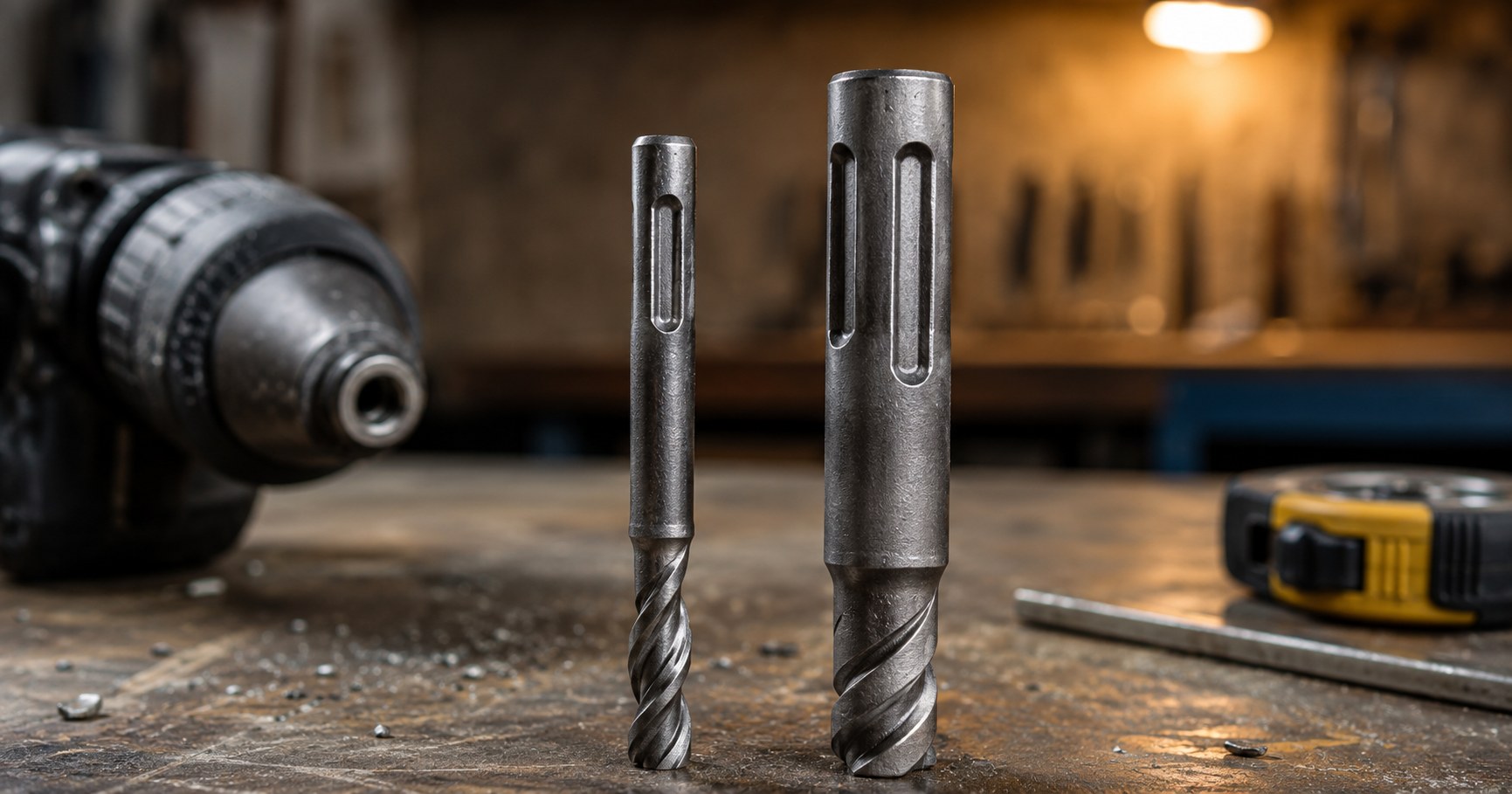
SDS-Plus vs. SDS-Max: What’s the Difference?
If you’ve started shopping for a rotary hammer or replacement bits, you’ve probably run into two shank systems that look similar but aren’t interchangeable: SDS-plus and SDS-max. Picking the wrong one means bits that simply won’t fit your tool, so it’s worth understanding the difference before you buy anything. This guide breaks down what actually separates the two systems, which jobs each one is built for, and how to figure out which one you need.
What SDS Actually Means
SDS stands for a bit-attachment system originally developed for masonry and concrete drilling tools. Instead of a standard chuck that clamps around a round bit shank, an SDS shank has grooves cut into it that lock into matching slots inside the tool. The bit can still move slightly forward and backward inside the chuck while it’s locked in rotationally, which is what lets the hammer mechanism deliver its pounding action efficiently. This design also makes swapping bits faster than a traditional keyed or keyless chuck, since you don’t need to tighten anything by hand.
SDS-plus and SDS-max are two different sizes of this same basic system. They are not compatible with each other: an SDS-plus bit will not lock into an SDS-max chuck, and vice versa, without an adapter.
SDS-Plus: The Everyday Standard
SDS-plus is the shank system used on most consumer and mid-range professional rotary hammers, including compact and mid-sized models built for general concrete and masonry drilling. The bits are lighter and slimmer, which keeps the tool itself smaller and easier to handle one-handed or overhead.
SDS-plus is the right choice for:
- Drilling anchor holes for shelving, conduit, or fixtures into concrete or brick
- General masonry drilling around the house or on smaller job sites
- Light-to-moderate chiseling work, such as removing tile or chasing out small channels
- Situations where tool weight and maneuverability matter more than raw power
SDS-Max: Built for Heavy-Duty Work
SDS-max uses a larger shank and correspondingly larger, heavier tools. These rotary hammers are built for sustained, high-impact work rather than occasional drilling. Because the shank is bigger, SDS-max bits and chisels can handle more torque and impact energy without excessive wear, which matters when you’re drilling larger-diameter holes or doing extended demolition work.
SDS-max is the right choice for:
- Drilling larger-diameter holes in concrete than SDS-plus tools are designed for
- Heavy demolition or chiseling work, such as breaking up concrete slabs or removing large sections of masonry
- Continuous professional or commercial use, where tool durability under sustained load matters more than portability
- Jobs where a smaller SDS-plus tool would struggle or wear out bits faster than expected
Quick Comparison
| Factor | SDS-Plus | SDS-Max |
|---|---|---|
| Typical tool size | Compact to mid-size | Larger, heavier |
| Best for | General drilling, anchor holes, light chiseling | Heavy-duty drilling, demolition, sustained professional use |
| Bit availability | Very wide, most common option | Narrower, more specialized |
| Typical user | Homeowners, general contractors, light commercial use | Professionals doing continuous heavy-duty concrete work |
Can You Use One Tool for Both?
Adapters exist that let you fit certain SDS-plus bits into some SDS-max tools, but they’re a workaround rather than a real solution — they add length and reduce the efficiency of the hammer action, and they don’t work in the other direction (you generally cannot fit an SDS-max bit into an SDS-plus tool at all, since the shank is physically too large). If you regularly need both light drilling and heavy demolition work, it’s usually more practical to own one tool from each category rather than rely on adapters for anything beyond occasional use.
Which One Should You Buy?
For most homeowners and general contractors, SDS-plus covers the vast majority of everyday drilling and light chiseling needs, and the tools themselves are easier to store, carry, and use for extended periods. SDS-max only makes sense once your work regularly involves large-diameter holes, heavy demolition, or sustained professional use where a smaller tool would wear out faster or simply can’t keep up.
If you’ve confirmed SDS-plus is the right system for your needs, our rotary hammer comparison walks through specific models across different price tiers and use cases, from occasional home use to daily professional work.
For a closer look at how rotary hammers differ from standard hammer drills in the first place, see our hammer drill buying guide, which also covers compatible bits and accessories.