Angle Grinder Discs Explained: Which Wheel Do You Actually Need?
Buying an angle grinder is only half the decision. What actually determines whether it can cut metal, grind down a weld, strip paint, or polish a surface is the disc you bolt onto it — and the wall of options at the hardware store (cutting wheels, grinding wheels, flap discs, wire wheels, all in a handful of thicknesses) isn’t exactly self-explanatory. Grab the wrong one and you’ll either get a poor result or create a genuine safety problem. This guide breaks down what each disc type actually does, so you know which one to reach for.
The One Rule That Matters More Than Any Other
Before getting into disc types: every disc is rated for a maximum RPM, printed right on the label. That rating has to be at or above your grinder’s no-load speed — never the other way around. A disc spinning faster than it’s rated for can fail violently. This isn’t a minor technicality; it’s the one spec you should check every single time you change a disc, regardless of which type you’re using.
Cutting Wheels: Thin and Made to Slice Through
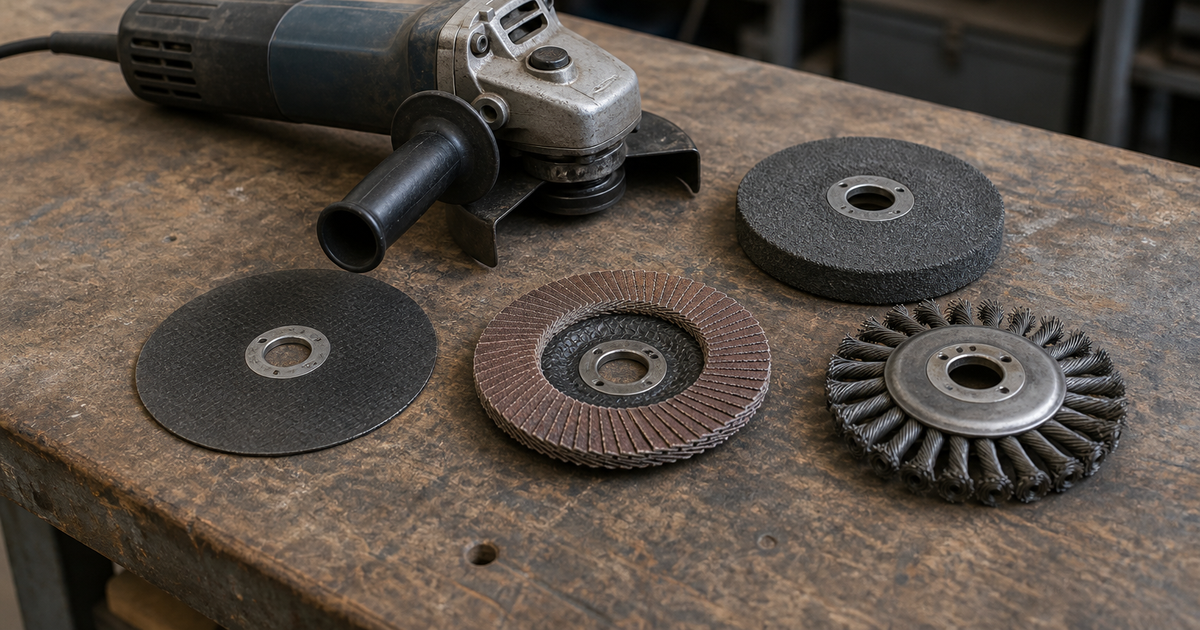
Cutting wheels (also called cut-off wheels) are thin — often just 1 to 3 millimeters — because a thinner wheel removes less material as it cuts, which means less friction, less heat, and a cleaner, narrower kerf. They come in different formulations depending on what you’re cutting: wheels designed for metal use different abrasives than wheels designed for masonry or tile, so match the wheel to the material rather than assuming one cutting wheel works for everything.
Because they’re thin, cutting wheels are also the most fragile disc type on this list. They’re designed to cut in a straight line, perpendicular to the material — using one at an angle, or trying to grind with it, is a common way to snap or shatter one.
Grinding Wheels: Thick and Built to Remove Material
Grinding wheels are noticeably thicker than cutting wheels, usually somewhere around 6 millimeters, which gives them the durability to handle sideways pressure. Their job is bulk material removal: knocking down a weld bead flush with the surrounding metal, cleaning up rough edges after a cut, or removing rust and scale before painting. Where a cutting wheel is used edge-on, a grinding wheel is used at a shallow angle against the surface, letting the flat face do the work.
Flap Discs: The Middle Ground for Finishing
A flap disc is made of overlapping abrasive flaps rather than a single solid wheel. As the outer flaps wear down, fresh abrasive is continuously exposed underneath, which gives them a more forgiving, gradual cutting action than a rigid grinding wheel. That makes them well suited to blending and finishing work — smoothing a weld after the bulk of it has been ground down, removing light surface rust, or prepping metal for paint — where you want material removed evenly without gouging the surface. They’re generally not the right choice for heavy stock removal; that’s still a job for a standard grinding wheel.
Wire Wheels: For Cleaning, Not Cutting
Wire wheels use twisted or crimped steel bristles instead of a bonded abrasive. They don’t remove base metal the way grinding or flap discs do — they’re built to strip away things sitting on top of it, like loose rust, old paint, or corrosion, without significantly altering the material underneath. They tend to throw off small wire fragments during use, so eye and hand protection matter even more than usual here.
Quick Reference
| Disc Type | Thickness | Best For |
|---|---|---|
| Cutting wheel | Thin (1–3 mm) | Slicing through metal, masonry, or tile |
| Grinding wheel | Thick (~6 mm) | Removing welds, heavy material, rust, and scale |
| Flap disc | Medium, self-renewing | Blending, finishing, light surface prep |
| Wire wheel | N/A (wire bristles) | Stripping paint, rust, and corrosion without removing base metal |
Which One Should You Buy First?
If you’re just getting started, a general-purpose grinding wheel and a metal-cutting wheel cover the majority of everyday jobs — cutting stock to length and cleaning up the result. Add a flap disc once you find yourself doing more finishing work, and a wire wheel if paint or rust removal comes up regularly. There’s no need to buy every type up front; build out your disc selection as the jobs you’re actually doing call for it.
If you haven’t settled on a grinder yet, our angle grinder comparison walks through a few current 125 mm models across different price tiers. And if you’re deciding between a corded and a cordless model, our angle grinder buying guide covers that trade-off along with the other basics worth knowing before you buy.