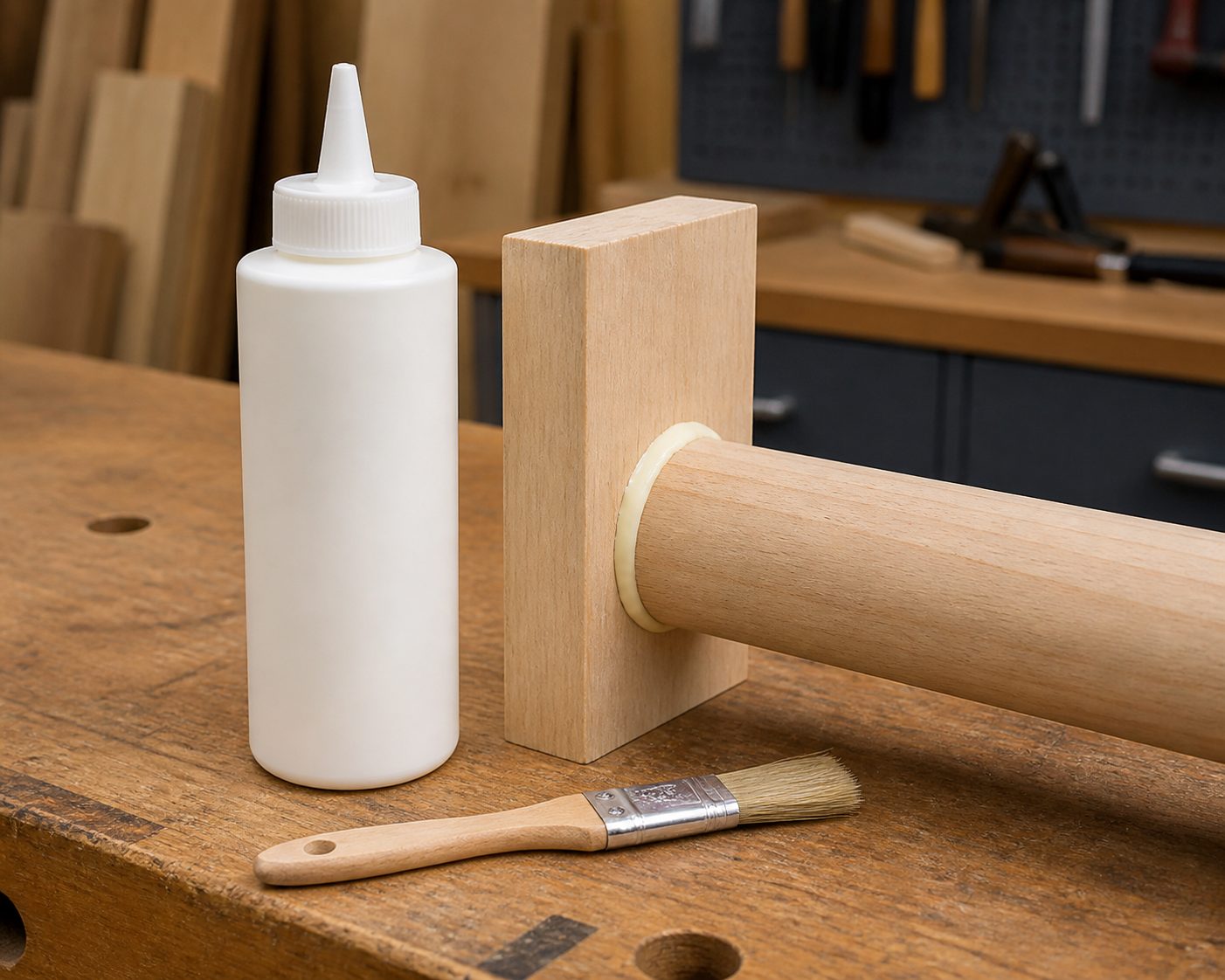

Wood Glue: Buying Guide
Quick Answer
For most indoor woodworking, standard PVA wood glue is all you need — it’s strong, easy to work with, and wipes off with a damp cloth before it cures. For outdoor projects or damp rooms, you need a water-resistant D3 or D4 rated glue instead.
Understanding the Glue Ratings
| Rating | Resistance | Use case |
|---|---|---|
| D1 | Not moisture resistant | Dry indoor use only |
| D2 | Brief occasional moisture | Kitchens, bathrooms (no standing water) |
| D3 | Weather-resistant, not permanently wet | Garden furniture, covered outdoor areas |
| D4 | High moisture resistance | Boats, permanently damp outdoor areas |
Getting the Application Right
Apply glue evenly to both surfaces being joined — a too-thin or uneven coat is the most common cause of a weak joint. Clamp the pieces together afterward; most PVA glues need about 30 minutes of clamping pressure but don’t reach full strength for 24 hours.
Common Mistakes
- Not enough clamping pressure: without firm contact between surfaces, you don’t get a load-bearing bond.
- Loading it too soon: even if the glue feels solid after clamping, it needs the full 24 hours to reach final strength.
- Wrong rating for the location: D1 glue outdoors will fail the first time it gets wet.
Bottom Line
Standard D2 PVA glue covers normal furniture and craft projects indoors. As soon as weather or moisture enters the picture, step up to D3 or D4 — the small extra cost is cheaper than a joint that fails later.