
Best Tool Cases Buying Guide
Quick Answer
Choosing a tool case comes down to matching the case type to how you’ll actually use it: hard cases for maximum impact and crush protection, soft cases for lighter tools and easier carrying, and modular foam-insert cases when you need tools instantly identifiable and secure during transport.
Hard Cases
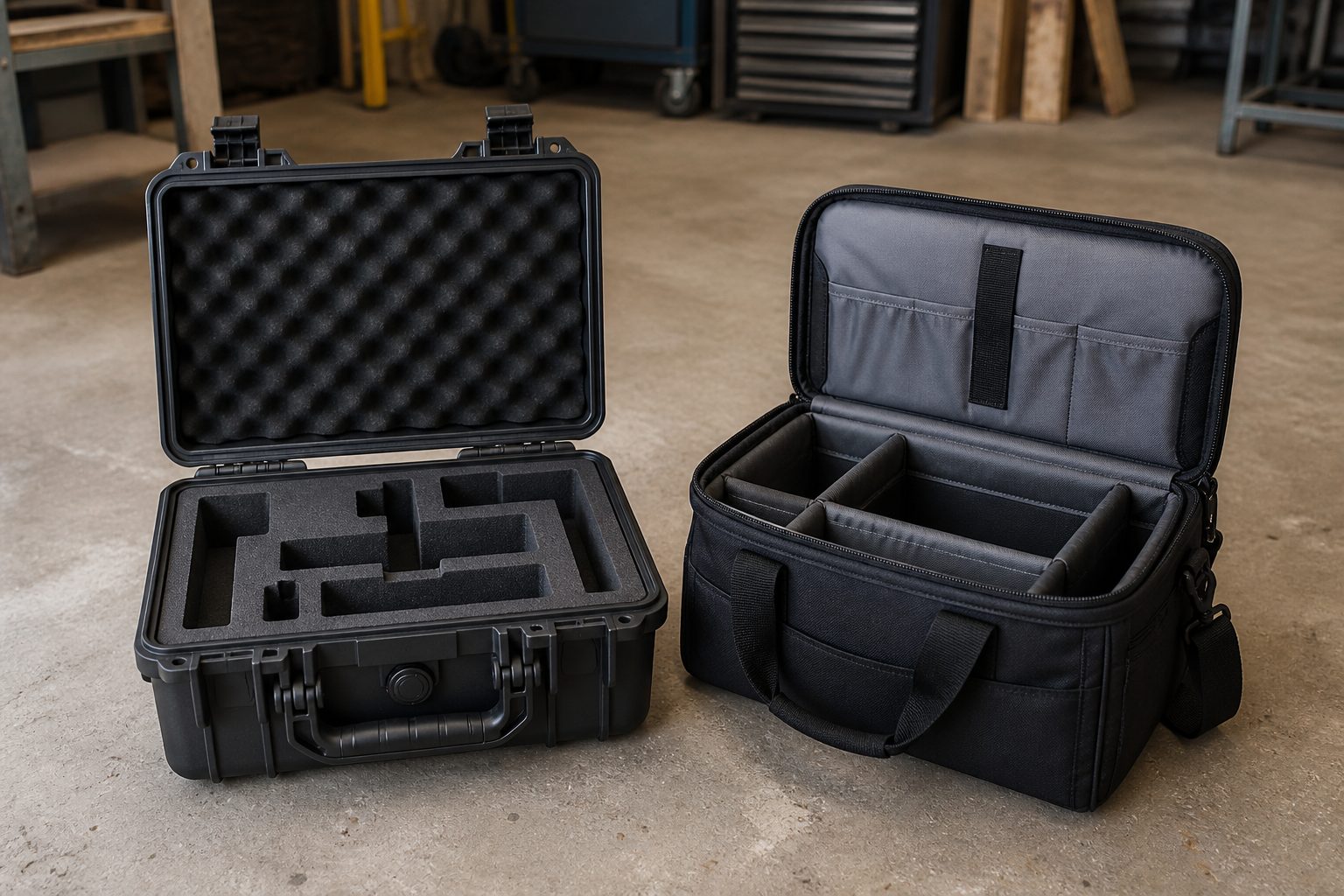
Injection-molded plastic hard cases resist impact, crushing, and water intrusion far better than soft alternatives, making them the right choice for tools that are expensive, fragile, or need to survive being dropped, thrown in a truck bed, or stacked under other equipment. The tradeoff is weight and bulk — a hard case adds noticeably more weight than a soft bag holding the same tools, which matters if you’re carrying it any real distance.
Soft Cases
Soft cases (heavy canvas, ballistic nylon, or similar) are lighter, often have more exterior pockets for small parts and accessories, and are generally more comfortable to carry over a shoulder for extended periods. They offer meaningfully less impact protection than a hard case, so they suit tools that are durable in their own right or situations where the case mainly needs to organize and carry, not survive a drop.
Foam Insert Systems
Custom-cut or pluck-foam inserts hold each tool in a dedicated cutout, which does two things at once: it prevents tools from shifting and rattling against each other during transport (reducing wear and noise), and it makes a missing tool immediately visible at a glance, since an empty cutout stands out clearly. This matters most for professional use where a missing tool mid-job is a real cost, less so for occasional home use.
Wheeled Cases
For heavier tool collections, a wheeled case trades some portability over rough or uneven terrain for dramatically easier transport over flat ground and longer distances — a real consideration if a case regularly needs to move between a vehicle and a job site across a parking lot or hallway rather than being carried a few steps.
Sizing to Your Actual Tools
An oversized case for a small tool collection wastes space and lets tools shift around more than a properly sized one would; an undersized case forces awkward stacking that increases wear on both the tools and the case’s latches over time. Measuring your actual tool set (including bulky items like a drill with its largest attached bit) before buying avoids both problems.
Practical Buying Criteria
For expensive or fragile tools that travel by vehicle, a hard case is worth the extra weight. For lighter, more durable tools carried by hand regularly, a soft case is more comfortable. For professional use where missing tools are a real cost, a foam-insert system pays for itself in accountability alone.