
Top Work Lights for Beginners
Quick Answer
Lumens (total light output) and color temperature matter more than wattage for work lights — LED lights produce far more usable light per watt than older halogen models, and a color temperature around 5000-6500K (daylight-white) reduces eye strain during detailed work compared to warmer, yellowish light.
LED vs Halogen
LED work lights run cooler, use a fraction of the power of halogen for the same brightness, and last far longer before needing replacement. Halogen lights are cheaper upfront but get genuinely hot to the touch and burn out faster — a real safety concern if placed near flammable materials on a job site.
How Much Light Do You Need?
| Task | Approximate lumens needed |
|---|---|
| General workspace illumination | 1,000–2,000 |
| Detailed work (wiring, fine assembly) | 2,000–4,000 |
| Large area/job site lighting | 4,000+ |
Stand Stability and Adjustability
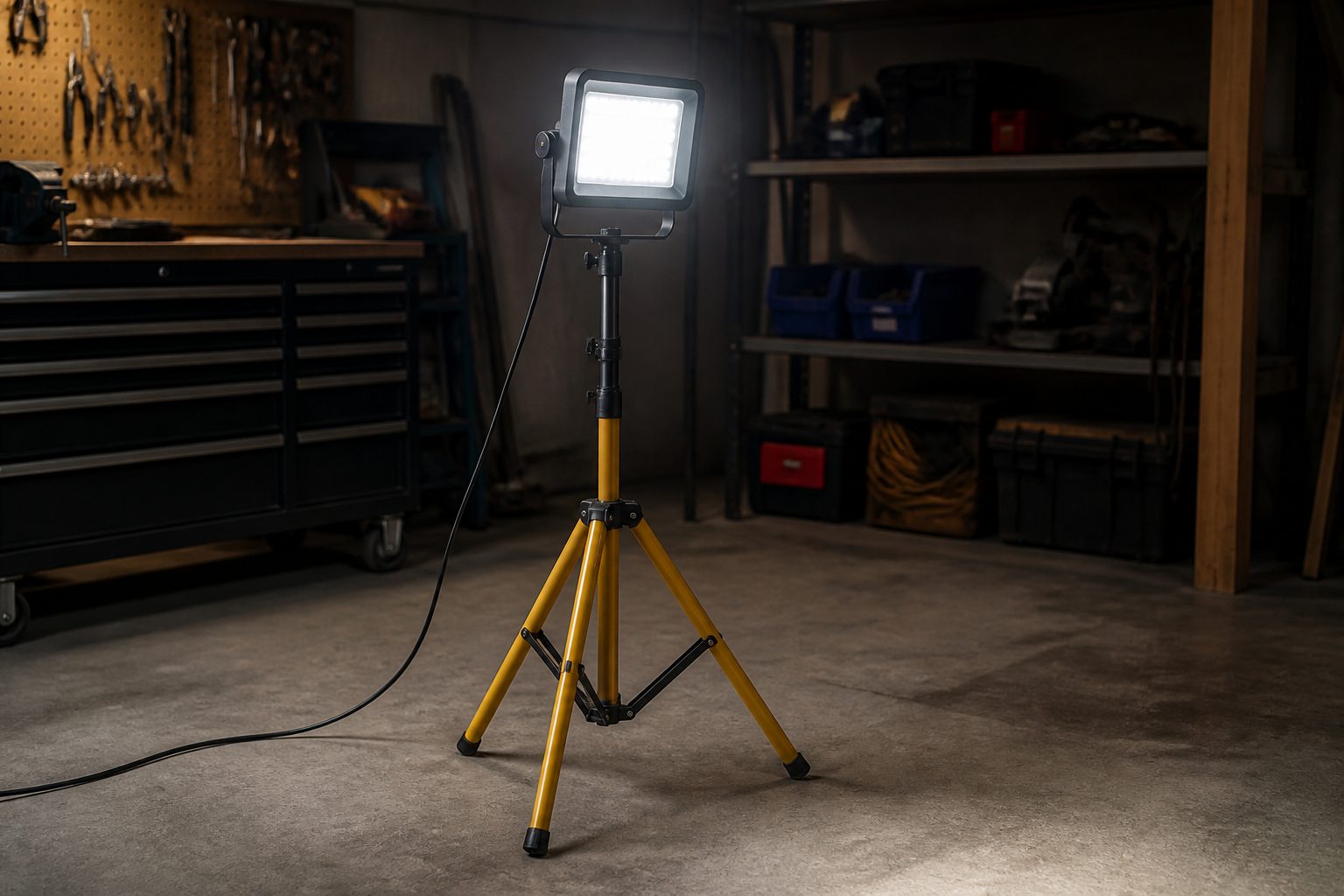
A tripod or telescoping stand that adjusts both height and angle lets you direct light exactly where needed rather than working around a fixed light source. Wide, weighted bases prevent tipping on uneven job-site ground — a real hazard with tall, narrow stands.
Battery vs Corded
Cordless work lights (often on the same battery platform as other cordless tools) offer placement flexibility anywhere, but run time is limited — check runtime at the brightness level you’ll actually use, not just the lowest setting. Corded lights provide unlimited runtime but restrict where you can position them.
Bottom Line
For most workshop and DIY use, an LED light in the 2,000-4,000 lumen range with an adjustable stand covers detailed work and general illumination alike — reserve halogen only if upfront cost is the deciding factor and heat/energy use aren’t concerns.