
Cordless Drill Battery Care: How to Charge, Store, and Extend Battery Life
The single habit that shortens a lithium-ion drill battery’s life fastest is routinely letting it sit at 0% charge for days or weeks — deep discharge stress is the leading cause of premature capacity loss in these packs, more than normal daily use ever is. The good news: the fixes are simple habits, not extra purchases.
How lithium-ion battery degradation actually works
Cordless drill batteries almost universally use lithium-ion cells today, which degrade through a combination of charge cycles, heat exposure, and time spent at extreme states of charge (either fully empty or fully full for extended periods). Unlike older nickel-cadmium batteries, lithium-ion packs have no “memory effect” — topping off a partially charged battery does not harm it, which is the opposite of what many users still assume from older tool generations.
Charging habits that actually extend life
- Charge after use, not before you need it again. Letting a battery sit empty for an extended period is more damaging than charging it after a partial discharge.
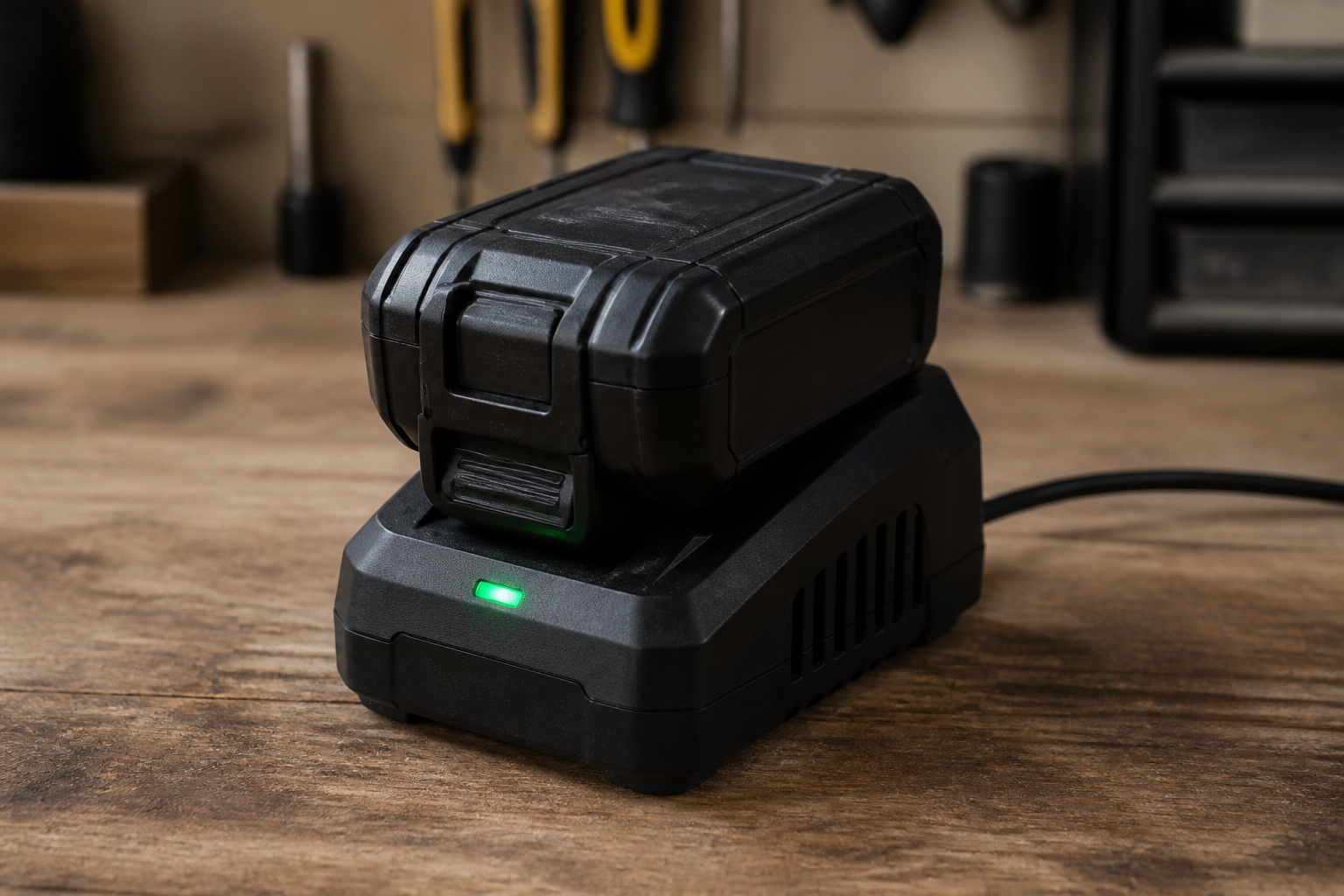
- Avoid leaving batteries on the charger indefinitely once fully charged — most modern chargers stop actively charging at 100%, but heat buildup from a battery sitting on an active charger base for days at a time still accelerates wear.
- Let a hot battery cool before charging. A battery that’s been under heavy load (or sitting in a hot truck) should cool to near room temperature before going on the charger — charging a hot pack accelerates internal degradation.
- Use the charger made for that battery platform. Mismatched or off-brand chargers may not correctly manage voltage cutoffs, which matters more for battery longevity than most users realize.
Storage: the most commonly ignored factor
For storage longer than a few weeks — over winter, or between infrequent projects — lithium-ion batteries last longest when stored at roughly 40–60% charge, in a cool, dry location, not in a hot garage or an unheated shed exposed to freezing temperatures. Storing a battery fully charged for months accelerates capacity loss just as much as storing it fully empty does; both extremes stress the cell chemistry more than a mid-range charge level.
A practical routine: before long-term storage, run the battery down to roughly half charge (a few minutes of normal drill use from full is usually enough), then store it indoors at normal room temperature rather than in an unheated workshop or vehicle.
Signs a battery is nearing end of life
A battery that once ran a full afternoon of drilling but now depletes within a few minutes, or one that shows full charge on the indicator but drops off suddenly under load, is showing normal age-related capacity loss rather than a fixable fault. Most drill batteries realistically last 2 to 5 years of regular use before this becomes noticeable, depending heavily on how well the charging and storage habits above were followed.
Cold weather changes battery behavior temporarily
Lithium-ion batteries used outdoors in cold weather will show reduced runtime and, in some cases, a tool that briefly cuts out under heavy load — this is a temporary effect of low temperature on battery chemistry, not necessarily permanent damage. Letting a cold battery warm to roughly room temperature before use restores most of the lost performance. What does cause lasting damage is charging a battery that’s still cold from being left outside; where possible, bring a cold battery indoors and let it warm up before placing it on the charger.
If the platform still uses older nickel-cadmium batteries
A smaller number of older cordless tools still use nickel-cadmium (NiCd) batteries rather than lithium-ion, and the advice above doesn’t fully apply to them — NiCd batteries do have a genuine memory effect and benefit from being run down more fully before recharging, the opposite of the lithium-ion guidance in this article. Checking which chemistry a specific battery pack uses (usually printed on the battery label) is worth doing before applying either care routine.
When it’s time to think about the whole tool, not just the battery
Buying a single replacement battery for an aging drill sometimes makes sense, but if the drill itself is several tool-generations old, a new battery on an outdated platform is rarely the best value — newer drills often deliver meaningfully better runtime and charge efficiency on the same battery platform. Anyone weighing that decision can compare current options in the Cordless Drills Comparison: Bosch, Makita, or DeWalt, which covers battery platform differences directly.